A Parent’s Guide to Kids’ Skateboard Lessons
Everything you need to know before signing your kid up, from someone who’s taught hundreds of them.
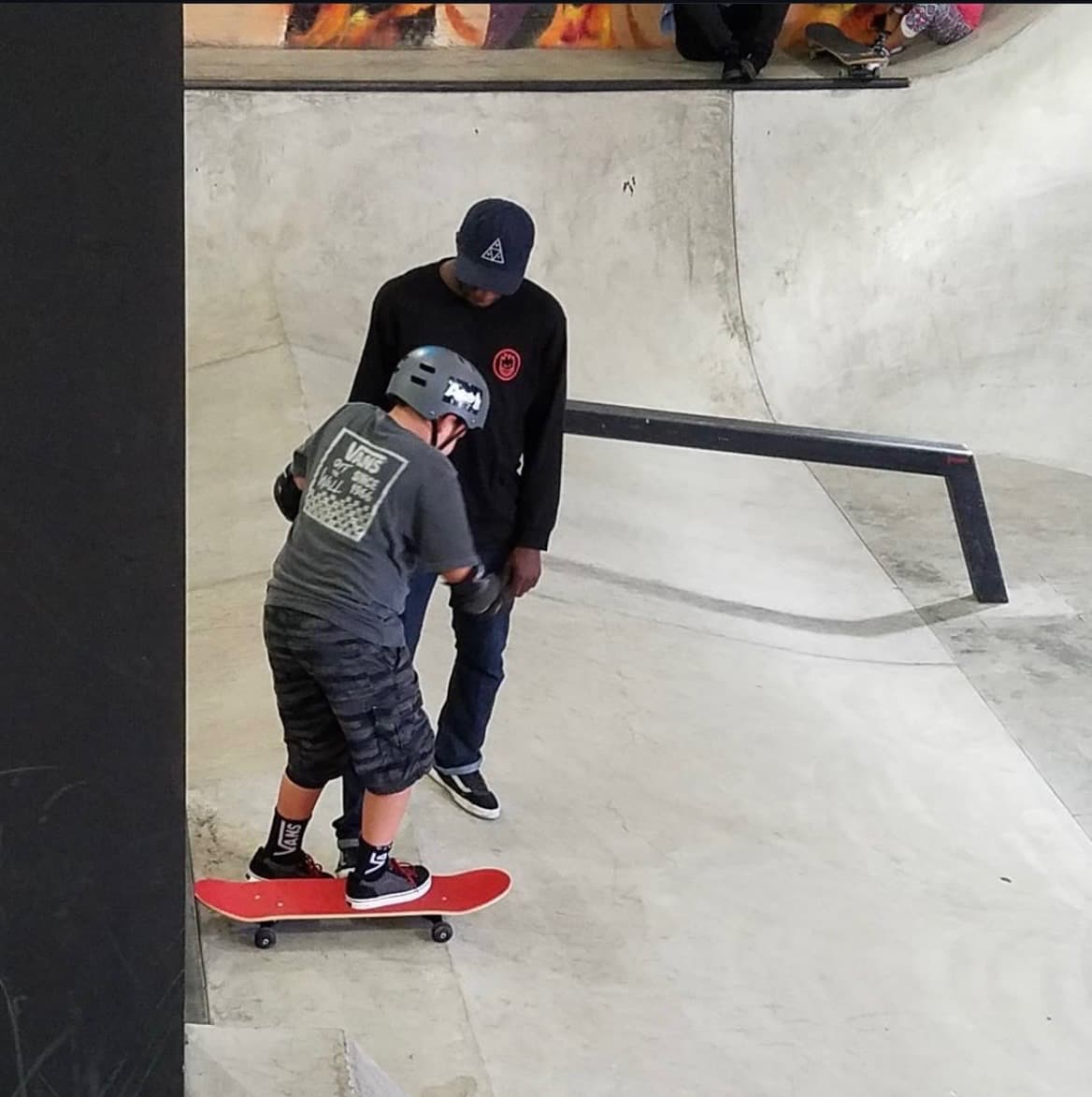
Parents ask me the same questions every week. Is skateboardingsafe? What age should my kid start? What do they need? Will they get hurt? These are good questions, and I never mind answering them, because I know that behind every question is a parent who wants their kid to try something new but needs to feel okay about it first.
So here’s everything I’d tell you if we were standing at the edge of a skatepark having this conversation.
What age can kids start skateboard lessons?
Most kids are ready for real skateboard lessons around age five or six, once they have the balance and attention span to follow directions. Kids as young as three can stand on a board with hands-on support, and I’ve seen plenty do it—but structured progression usually clicks from five and up.
I’ve worked with kids as young as three. At that age, it’s really just standing on the board, holding my hands, getting used to the feeling. It’s more play than instruction, and that’s fine. They’re building comfort with the board.
The sweet spot for real lessons is around five or six. By then, most kids have the balance, coordination, and attention span to follow directions and make real progress. They can push on their own, practice stopping, and start to feel that moment where the board becomes an extension of their body instead of a foreign object under their feet.
That said, every kid is different. I’ve had four-year-olds who were ready and eight-year-olds who needed a few sessions just to get comfortable standing still. There’s no wrong age to start. There’s only the right pace for your kid.
How safe are skateboard lessons for kids?
With proper gear and qualified instruction, skateboarding is comparable to most youth sports in injury risk. According to the American Academy of Pediatrics, soccer and basketball actually produce higher youth injury rates. The key difference is supervised lessons—kids who learn from an instructor pick up safe falling habits from day one.
Let me be real: skateboarding involves falling. There is no version of learning to skate that doesn’t include falling. But here’s what most people don’t know: falling is the first thing I teach. Before we push, before we ride, we practice how to fall. Knees down, roll with it, protect your wrists. Kids love this part. They think it’s hilarious.
With proper gear and instruction, skateboarding is comparable to most youth sports in terms of injury risk. Soccer and basketball have higher injury rates. The difference is that skateboarding looks scarier, so parents worry more. I get it. But when your kid is wearing a helmet, knee pads, elbow pads, and wrist guards, learning on flat ground with an instructor watching every move, they’re in good hands.
What do kids need for their first skateboard lesson?
A certified skate helmet, knee pads, elbow pads, wrist guards, and flat-soled shoes. That’s the non-negotiable list. The CPSC reports that helmets reduce the risk of head injury by up to 85 percent, so this isn’t optional. Most instructors, myself included, can provide a board for the first session.
For the first lesson, most of the time I can provide a board. What your kid needs to bring:
- ■Helmet: a certified skate helmet (CPSC or ASTM). Not a bike helmet. Skate helmets protect the back of the head differently.
- ■Knee pads, elbow pads, wrist guards. These are non-negotiable for kids. Even if they complain.
- ■Flat-soled shoes: Vans, Converse, or any skate shoe. Nothing with a raised heel or thick cushion. No sandals, no Crocs.
- ■Comfortable clothes. Nothing baggy enough to catch on the board, nothing tight enough to restrict movement.
If your kid decides they love it and wants their own board, skip the toy store. Those $25 boards from Target are heavy, have bad bearings, and are genuinely harder and less safe to ride. Go to a real skate shop. A quality complete setup runs about $80-120 and makes a massive difference. Your kid will progress faster and have more fun on a proper board.
Want to try it yourself?
Book a private lesson with Leon. NYC and Westchester, all ages and skill levels.
What happens in a kid’s first skateboard lesson?
We start on a non-rolling surface so your kid can find their stance and get comfortable standing on the board. From there we move to flat ground for pushing, stopping, and basic turning. Most kids are cruising on their own by the end of the first hour—and the grin that shows up about ten minutes in usually doesn’t leave.
Every kid is different, but a typical first lesson goes something like this: we start on grass or carpet so the board doesn’t roll while they get used to standing on it. We figure out their stance. Are they regular (left foot forward) or goofy (right foot forward)? Then we practice stepping on and off. Getting comfortable.
Then we move to smooth flat ground and they learn to push. This is where the magic happens. You can see the exact moment a kid goes from nervous to excited. It usually takes about ten minutes. Once they feel the board roll under them and they’re still standing, the fear turns into this huge grin. That’s the moment I live for as an instructor.
By the end of the first session, most kids can push, coast, and do a basic stop. Some are already trying to turn. They always want to keep going.
What does skateboarding teach kids that other sports don’t?
Skateboarding teaches kids that failure is part of the process, not the end of it. Research published in the Journal of Youth and Adolescence links action sports like skating to measurable gains in resilience, self-regulation, and intrinsic motivation. There’s no bench, no one gets cut, and the culture is built on encouraging each other.
I’m not here to trash other sports. But skateboarding does something unique for kids: it teaches them that failure is part of the process, not the end of it. In team sports, a mistake can cost the game, and the pressure from coaches and teammates can make kids afraid to try. In skateboarding, falling is just what happens between landing things. There’s real research showing that this builds resilience, self-confidence, and emotional regulation.
There’s no bench in skateboarding. No one gets cut. Your kid doesn’t have to be the fastest or the strongest to belong. The culture is built on encouraging each other. When a kid at the park lands something new, everyone cheers. Even strangers. That sense of community without competition is something a lot of kids really need, especially the ones who don’t thrive in traditional team sports.
And there’s one more thing: skateboarding is something they can do for the rest of their lives. It’s not a youth sport that ends at 18. I’m still skating at 37. The foundation your kid builds now will give them something to come back to forever. A way to move, to clear their head, to feel good in their body. That’s worth more than any trophy.
Frequently Asked Questions
What age can kids start skateboarding?+
Most kids can start structured lessons around age 5-6. Kids as young as 3-4 can get comfortable on a board with close supervision, but real progression typically begins at 5 and up.
Is skateboarding safe for kids?+
With proper safety gear and qualified instruction, skateboarding is comparable to most youth sports. A good instructor teaches falling technique first and progresses gradually.
What safety gear do kids need?+
A certified skate helmet (not a bike helmet), knee pads, elbow pads, wrist guards, and flat-soled closed-toe shoes. All non-negotiable.
Do kids need their own skateboard?+
Not for the first few sessions. Most instructors can provide a board. If your child wants to continue, a quality complete setup from a real skate shop costs $80-120.
What do kids learn in the first lesson?+
Finding their stance, standing and balancing, safe falling technique, pushing and stopping, and basic turning. Most kids are cruising on their own by the end.
How much do kids' skateboard lessons cost in NYC?+
Private lessons typically range from $75-150 per hour in NYC. Group lessons are more affordable, and many instructors offer multi-lesson packages.
See kids lesson options and pricing, or read about how much skateboard lessons cost.
Ready to get them started?
Personalized skateboard lessons for kids and families in NYC. Patient instruction, proper safety gear, and a whole lot of fun.
Book a Lesson