Is Skateboarding Good Exercise? (Better Than You Think)
People always ask me this. The short answer is yes. The longer answer is more interesting.
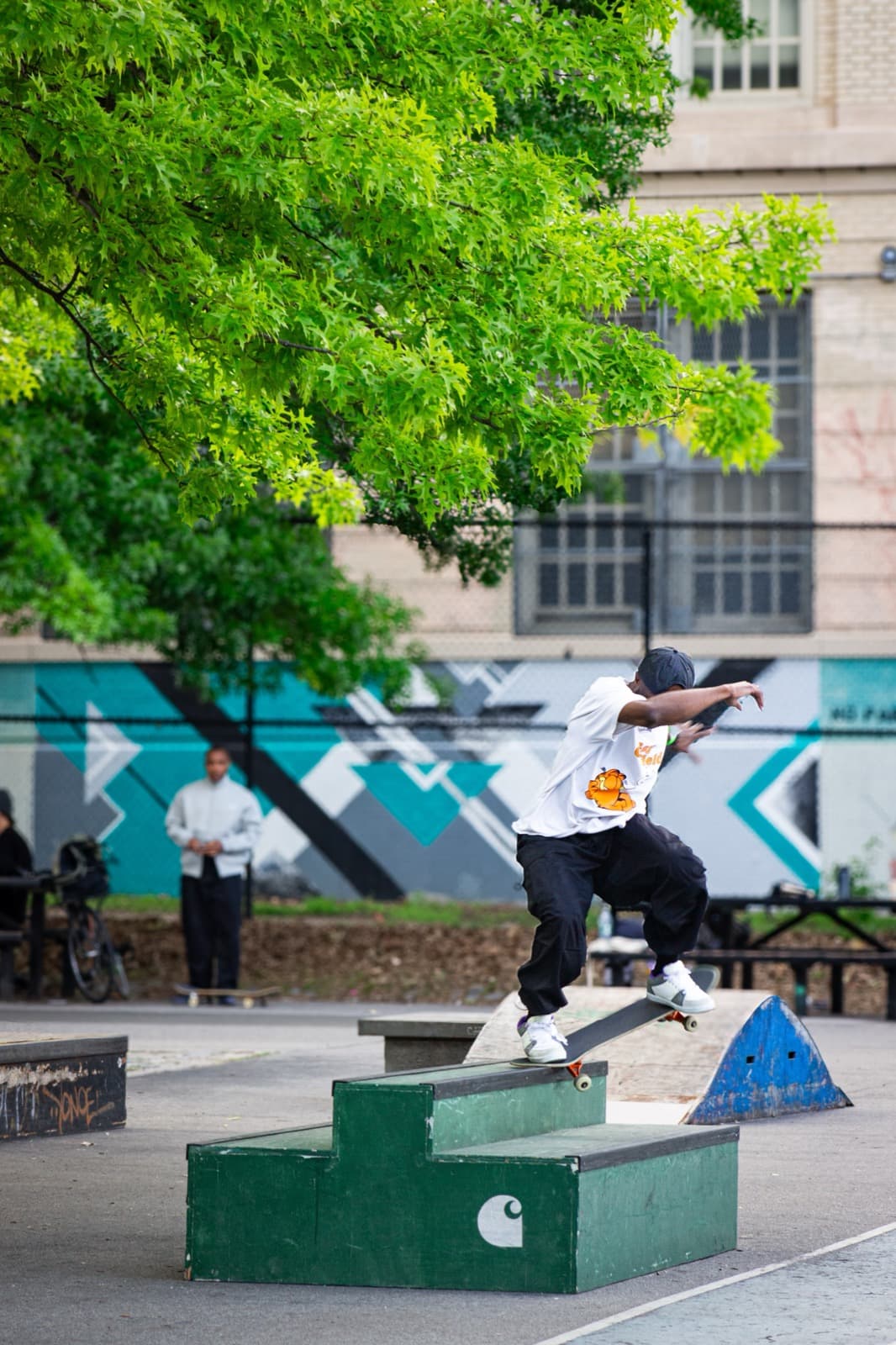
I get this question from almost every new student. Usually from adults in their 30s or 40s who haven’t been on a board since middle school and want to know if it “counts” as a workout. Yes. It absolutely counts. If you are just getting started, here is what to know before your first lesson.
I’ve been skateboarding for over 33 years. I’m in better cardiovascular shape now than most people half my age, and I haven’t set foot in a gym in years. That’s not bragging. That’s just what happens when you spend a few hours a week on a board. Skateboarding is a full-body workout disguised as fun, which is exactly why it works so well.
But let me break it down properly, because the fitness benefits go deeper than most people realize.
What muscles does skateboarding work?
Skateboarding targets your quads, hamstrings, glutes, calves, and core all at once—plus the ankle stabilizers, hip flexors, and small knee muscles that most gym routines skip entirely. Even standing still on a board fires dozens of stabilizer muscles most people never train.
The moment you step on a skateboard, your body starts working in ways that are hard to replicate in a gym. Just standing on the board requires constant micro-adjustments from your ankles, your core, and dozens of small stabilizer muscles that most people never train. Your brain is sending rapid-fire signals to keep you balanced, and those muscles are firing continuously. It’s not passive. Even standing still on a board is active work. (For more on the learning curve, see my guide on how many lessons it takes.)
Then you start pushing. Pushing is essentially single-leg cardio. You’re balancing on one foot while the other drives you forward, over and over. Your standing leg is doing a sustained squat hold while absorbing vibration from the ground. Your pushing leg is extending and contracting through a full range of motion. Switch to your other foot and you’re training both sides of your body. It’s more demanding than it looks.
Turning engages your obliques and hips. Carving, where you lean into wide arcing turns, works your entire posterior chain. Even something as simple as riding over cracks in the sidewalk activates your ankles and knees as shock absorbers. And you’re doing all of this in a low, athletic stance, knees bent, weight centered. Imagine holding a squat position that also happens to be cardio. That’s skateboarding.
I tell my students to pay attention to how their legs feel after their first session. Most of them are sore in muscles they didn’t know they had. That’s not because they’re out of shape. It’s because skateboarding demands things from your body that other activities simply don’t.
How many calories does skateboarding burn?
Skateboarding burns roughly 300–500 calories per hour depending on intensity and body weight. Harvard Health classifies it as moderate-to-vigorous physical activity—the level recommended for cardiovascular health—putting it on par with swimming laps or singles tennis.
If you’re someone who likes data, the numbers are genuinely impressive. Skateboarding burns between 300 and 500 calories per hour depending on your intensity and body weight. That puts it on par with swimming laps, cycling at a moderate pace, or playing singles tennis. Harvard Health has categorized skateboarding as a moderate-to-vigorous physical activity, which is the level recommended for cardiovascular health.
But calorie burn is only part of the picture. Skateboarding primarily works your quads, hamstrings, glutes, and calves. Your core is engaged the entire time you’re on the board. Beyond the major muscle groups, you’re training ankle stabilizers, hip flexors, and the small muscles around your knees that protect your joints. These are the muscle groups that most gym routines skip entirely. People do leg press and squats, but they rarely train the stabilizers that keep those joints healthy and mobile.
Coordination is another huge benefit that doesn’t show up on a calorie counter. Skateboarding requires you to coordinate your upper and lower body independently while maintaining balance on a moving surface. Over time, this improves your overall body control, your reflexes, and your spatial awareness. These are things that matter a lot as you get older, and skateboarding trains them better than almost any other activity I know of.
Why doesn’t skateboarding feel like exercise?
Because your brain is solving a creative, physical puzzle the entire time. You’re not counting reps or watching the clock—you’re focused on making a turn smoother or riding off a curb cleaner. Time disappears, and the fitness happens as a side effect of the fun.
This is the part that matters most, and the reason skateboarding works as a fitness habit where gym memberships fail. When you’re on a treadmill, you’re watching the clock. You’re counting minutes, counting steps, waiting for it to be over. The whole experience is built around enduring discomfort until the timer goes off.
Skateboarding is the opposite. You’re problem-solving the whole time. You’re focused on getting that turn a little smoother, or figuring out how to ride off a curb, or trying to push a little faster without losing your balance. Your brain is fully engaged in a creative, physical puzzle. That kind of deep focus is why skateboarding works so well for people with ADHD. You’re not counting reps. You’re not watching the clock. Time disappears. You look down at your phone and an hour has passed, your shirt is soaked, and you’re genuinely sad it’s time to stop.
One of my adult students lost about 20 pounds over the course of six months. When I mentioned it, he said, “I wasn’t trying to get in shape. I just wanted to learn to ollie.” That’s the power of skateboarding as exercise. The fitness is a side effect. The motivation comes from the skating itself.
This is why people stick with it. Nobody quits skateboarding because they got bored. There’s always something new to learn, a new spot to skate, a new trick to work on. The challenge keeps pulling you forward, and your body gets stronger along the way without you having to force it.
Want to try it yourself?
Book a private lesson with Leon. NYC and Westchester, all ages and skill levels.
Does skateboarding get harder as you improve?
Yes—and that’s what makes it a rare kind of workout. Unlike running or weightlifting where you have to deliberately increase the load, skateboarding scales up automatically. As your skills grow, you naturally attempt harder tricks, skate faster, and hit bigger terrain. The physical intensity keeps rising on its own.
Here’s something interesting about skateboarding that makes it different from most other forms of exercise. With running, the fitter you get, the easier your regular route becomes. You have to deliberately push yourself to run farther or faster. With weightlifting, you have to intentionally add plates. The progression is manual. You have to force it.
Skateboarding scales up automatically. As you get better, you naturally attempt harder tricks. You skate faster. You hit bigger ramps, longer rails, steeper hills. The challenge grows with your ability because the thing that motivates you, the desire to do something new, keeps pushing the intensity higher. You never plateau physically because the creative challenge keeps growing alongside your skill.
I’ve been skating for over three decades and I still come home exhausted. Not because I’m doing the same things I did 20 years ago. Because the things I’m working on now demand more from my body than ever. The workout grows with you. That’s a rare quality in any physical activity.
I see this with my students too. The beginners who start out just learning to balance and push are, six months later, dropping into bowls and grinding ledges. Their fitness level has completely transformed, but they never once thought about “working out.” They were just skating.
What are the hidden fitness benefits of skateboarding?
Proprioception, reaction time, flexibility, and bone density—four things most fitness conversations overlook. Skateboarding trains your body’s spatial awareness every second you’re on the board, and the repeated impact loading from riding rough ground and absorbing vibration increases bone density over time.
Beyond the obvious cardio and strength benefits, skateboarding trains your body in ways that most fitness conversations completely overlook. Proprioception, your body’s ability to sense where it is in space, gets a massive workout every time you step on a board. Your brain is constantly processing information about your balance, your speed, the angle of the ground, and the position of your limbs. Over time, this makes you more coordinated and more aware of your body in every situation, not just on a skateboard.
Reaction time is another one. When you’re skating and something unexpected happens, a crack in the pavement, a pebble, a pedestrian stepping into your path, your body has to respond instantly. That kind of split-second reaction training is something athletes pay good money for, and skaters get it for free every single session.
Flexibility improves too, even though nobody thinks of skateboarding as a flexibility workout. All that crouching, extending, twisting, and absorbing impact keeps your joints mobile and your muscles elastic. And the impact itself, the repeated loading from riding over rough ground, jumping off curbs, and absorbing vibrations, increases bone density. That’s something that becomes increasingly important as you age.
And then there’s the mental health side. I wrote about this in more detail in my piece on why skateboarding builds resilience and in my guide on skateboarding and anxiety, but the short version is that skateboarding reduces stress, improves focus, and produces a state of flow that functions like active meditation. When you’re on a board, you’re fully present. Your anxieties and your to-do list disappear. That mental reset is as valuable as any physical benefit.
Is skateboarding a good workout for beginners?
You don’t need to be in shape to start—skateboarding will get you there. I teach kids as young as five and adults in their 60s, and every single one of them gets stronger, more coordinated, and more confident. The fitness gains are real at every age and every starting point.
I hear people say they want to get in shape before they start skateboarding. That’s like saying you want to learn to swim before you get in the pool. You don’t need to be in shape to start. Skateboarding will get you in shape. That’s the whole point. I teach kids as young as five and adults in their 60s, and the fitness gains are real at every age.
Every single one of my students, regardless of age or fitness level, has gotten stronger, more coordinated, and more confident from skating. Not because they were grinding through a workout plan. Because they were having fun, learning something new, and their bodies adapted along the way. If you’ve been thinking about trying it, stop thinking and book a lesson. Your body will thank you.
Frequently asked questions
How many calories does skateboarding burn?+
Skateboarding burns between 300 and 500 calories per hour depending on intensity and body weight, comparable to swimming laps, moderate cycling, or singles tennis.
What muscles does skateboarding work?+
Skateboarding primarily works your quads, hamstrings, glutes, and calves while your core stays engaged the entire time. It also trains ankle stabilizers, hip flexors, and small muscles around your knees that most gym routines skip.
Is skateboarding better exercise than running?+
Skateboarding scales up automatically. As you get better, you naturally attempt harder tricks and skate faster. Unlike running where you must deliberately push yourself farther, skateboarding’s creative challenge keeps raising the physical intensity on its own.
Do I need to be in shape before I start skateboarding?+
No. Skateboarding will get you in shape. Every student, regardless of age or fitness level, gets stronger, more coordinated, and more confident from skating.
Ready to find out for yourself?
Personalized skateboard lessons in NYC for adults, kids, and families. No experience needed.
Book a Lesson