How to Skateboard for Beginners: A Step-by-Step Guide
Everything you need to know to go from never having stood on a board to riding with confidence. From an instructor who’s been skating for 33 years.
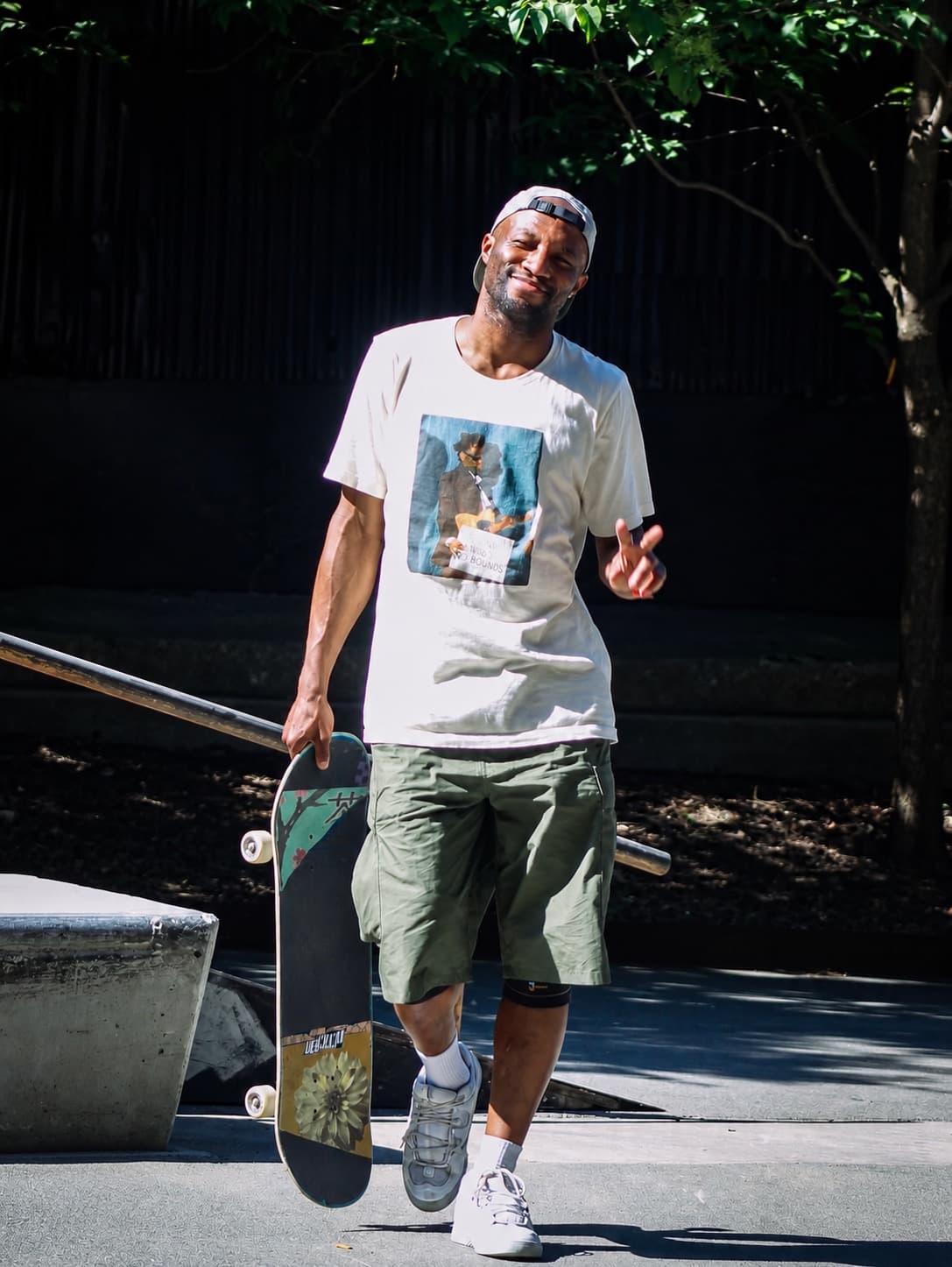
I started skating at five years old in the Bronx. No lessons, no tutorials, no one telling me where to put my feet. Just a board and a sidewalk. I figured it out the hard way, and 33 years later, I teach people every day how to skip the hard way.
This guide is everything I tell my students in their first few lessons. It won’t replace having someone watch your form and give you real-time corrections, but it will get you started on the right foot. Literally.
What skateboard should a beginner buy?
A standard popsicle-shaped deck between 7.75 and 8.25 inches wide from an actual skate shop—not a department store. Quality completes run $80 to $150 and use real bearings and trucks that actually turn. Cheap toy boards fight you on every push and make learning harder than it needs to be.
The board matters more than people think. I can’t tell you how many beginners show up to a lesson with a plastic board from a department store and wonder why skating feels impossible. Those boards have cheap bearings that barely roll and trucks that don’t turn. You’re fighting the equipment before you even start.
Get a real skateboard from a skate shop. A quality complete setup runs $80 to $150. You want a standard popsicle shape with a deck width between 7.75 and 8.25 inches for most people. If you’re not sure about sizing, I wrote a whole breakdown on what size skateboard to get.
If you’re debating between a skateboard and a longboard, here’s my take on that. Short version: a standard skateboard is more versatile. A longboard is easier to cruise on but limits what you can learn.
How do I find my skateboarding stance?
Stand on a smooth floor in socks and have someone give you a light push from behind. Whichever foot you step forward with is your natural front foot. Left foot forward is regular, right foot forward is goofy. Roughly 44% of skaters ride goofy—neither stance is better or worse.
Before you even step on the board, you need to know which foot goes in front. Left foot forward is called regular. Right foot forward is goofy. Neither one is better. It’s just how your body is wired.
Here’s the easiest way to figure it out: stand on a smooth floor in socks and have someone give you a light push from behind. Whichever foot you step forward with to catch yourself is probably your front foot. You can also try sliding across a kitchen floor. The foot that leads is your natural front foot.
Don’t overthink this. Some people feel natural right away. Others need a few sessions to be sure. I’ve had students switch stances after a week and suddenly everything clicks. Your body knows. Trust it.
How do you balance on a skateboard?
Bend your knees, keep your weight centered over the board, and start on a surface where the board won’t roll—grass or carpet. Front foot over the front bolts, back foot on the tail. A lower center of gravity absorbs bumps and keeps you stable. Stiff legs are the number one reason beginners fall.
Find a flat, smooth surface. Grass or carpet works great for the very first time because the board won’t roll out from under you. Step on with your front foot over the front bolts and your back foot on the tail. Bend your knees. This is the part most beginners skip, and it’s the most common reason people fall.
Stiff legs are your enemy on a skateboard. When your knees are bent, your center of gravity is lower and you can absorb bumps and shifts in the board. When you’re standing straight up like a telephone pole, any little movement sends you flying. I tell every single student the same thing: if you remember nothing else, remember to bend your knees.
Shift your weight around. Rock forward and back. Get comfortable with the feeling of the board under you before you try to go anywhere. Spend five or ten minutes here. It’s not exciting, but it’s the foundation for everything else.
Want to try it yourself?
Book a private lesson with Leon. NYC and Westchester, all ages and skill levels.
How do you push on a skateboard?
Place your front foot over the front bolts pointing forward, push off the ground gently with your back foot, then bring it up onto the board. Always push with your back foot—pushing with the front foot (called “mongo”) shifts your weight to the wrong place and makes every trick harder later.
Now move to pavement. Put your front foot on the board pointing forward, roughly over the front bolts. Your back foot stays on the ground. Push off gently with your back foot, then bring it up onto the board behind your front foot. Both feet should be roughly perpendicular to the board when you’re riding.
The biggest mistake I see: pushing with the front foot instead of the back foot. This is called pushing mongo, and while some people insist it’s fine, it puts your weight in the wrong place and makes every trick harder down the line. Learn to push correctly from day one. It’s one of those things that’s easy to learn right and painful to fix later.
Start with small pushes. You don’t need speed right now. You need control. Push, ride for a few feet, step off. Repeat. Once that feels natural, try two pushes in a row. Then three. Build up gradually.
How do you stop on a skateboard?
The most reliable method is a foot brake: take your back foot off the board and drag the sole of your shoe along the ground. At low speeds, you can also step off and run it out. According to emergency room data, most beginner skateboard injuries happen because people never learned to stop before they learned to go fast.
This is the part everyone should learn before they learn to go fast, and almost nobody does. There are a few ways to stop, and you should know at least two.
The simplest method: foot brake. Take your back foot off the board and drag the sole of your shoe along the ground. It scrapes up your shoes, but it works. This is why flat-soled shoes matter for skating. Running shoes with a curved sole make this way harder than it needs to be.
The other beginner-friendly method: just step off. At low speeds, you can simply take your back foot off and run it out. No shame in that. You can also do a controlled heel drag on the tail, pressing the tail down so it touches the ground. That stops you faster but wears down your tail.
Whatever you do, don’t jump off backward when you get scared. That’s how people fall hard. If you need to bail, run off forward in the direction you’re moving.
How do you turn on a skateboard?
Lean in the direction you want to go—press your toes to turn one way, your heels to turn the other. Your trucks are designed to pivot when you shift your weight, so you don’t need to force anything. Once lean turns feel natural, try kick turns: shift weight to the tail, lift the front wheels, and pivot your body.
Once you can push and stop, turning is next. The basic turn is simple: lean in the direction you want to go. Press down on your toes to turn one way, your heels to turn the other. The trucks on your skateboard are designed to pivot when you shift your weight. You don’t need to force anything.
If the board doesn’t turn much, your trucks might be too tight. Most completes come pretty stiff out of the box. A quarter turn on each kingpin nut with a skate tool loosens them up. Don’t go crazy though. Too loose and the board feels wobbly at speed.
After you get comfortable with lean turns, try kick turns. Shift your weight to the tail so the front wheels come off the ground slightly, then pivot your body in the direction you want to go. Kick turns are the gateway to everything in skateboarding. Half the tricks I teach are just kick turns dressed up differently.
What gear do beginner skateboarders need?
A certified helmet is the single most important piece of gear. Studies show helmets reduce the risk of serious head injury by up to 85%. Knee pads and wrist guards are optional for adults but recommended if you’re nervous about falling—they give you permission to commit to moves you’d otherwise hesitate on.
Wear a helmet. I know, I know. But especially when you’re starting out, a helmet turns a trip to the emergency room into a funny story you tell your friends. If you’re skating with kids, helmets are non-negotiable. I require them for every lesson.
Knee pads and wrist guards are optional for adults but I recommend them if you’re nervous about falling. They give you permission to try things. I go into more detail in my protective gear guide.
What should you learn after the basics of skateboarding?
Once pushing, stopping, and turning feel automatic, move on to tic tacs (quick alternating kick turns that build speed), riding over cracks and small obstacles, riding fakie (backward), and eventually the ollie. Don’t rush to tricks—solid fundamentals make every trick you learn after them come faster.
Once you can push, stop, and turn without thinking about it, you’re past the beginner stage. Here’s what I usually work on next with my students: tic tacs (quick alternating kick turns that build speed), riding over cracks and small obstacles, riding fakie (backward), and eventually the ollie.
Don’t rush to tricks. I see this all the time. Someone spends two days skating and wants to ollie. The ollie will come. But if your balance and pushing aren’t second nature, you don’t have the platform to build tricks on. Put in the hours on fundamentals. They pay off tenfold.
When should a beginner get skateboard lessons?
When you feel stuck, keep making the same mistake, or can’t figure out what you’re doing wrong. Most self-taught skaters develop invisible bad habits—leaning too far back, closed shoulders, wrong foot placement—that an instructor can spot and correct in minutes. A few sessions early on saves months of frustration.
I’m not going to pretend a guide like this covers everything. It doesn’t. Reading about balance and feeling it under your feet are two different things. You can follow every step here and still develop habits you can’t see, like leaning too far back or keeping your shoulders closed.
That’s where having an instructor helps. Not forever. Most of my students take a handful of sessions at the start, get their foundation right, and then practice on their own. They come back when they hit a plateau or want to learn something new. Three to five lessons early on saves months of unlearning bad habits later.
But whether or not you ever take a lesson, the most important thing is to get on the board and skate. Consistently. Every skater you admire started exactly where you are right now.
Frequently Asked Questions
How long does it take to learn to skateboard?+
Most beginners can balance, push, and stop within their first few sessions. With consistent practice, expect to feel comfortable cruising in 2-4 weeks. Basic tricks come within a month or two. An instructor can accelerate this significantly.
What is the best skateboard for a beginner?+
A standard popsicle-shaped board with a deck width between 7.75 and 8.25 inches. Avoid cheap department store boards. A quality complete from a skate shop runs $80-$150 and makes a real difference.
Am I too old to learn to skateboard?+
No. I teach adults in their 30s, 40s, 50s, and beyond. Adults often learn fundamentals faster than kids because they can process instruction and apply corrections quickly. Wear proper gear and progress at your own pace.
How do I know if I'm regular or goofy footed?+
Stand in socks on a smooth floor and slide. Whichever foot goes forward is likely your front foot. Left foot forward is regular, right foot forward is goofy. Neither is better.
Do I need lessons or can I learn on my own?+
You can learn the basics on your own, but most self-taught skaters develop bad habits with foot placement and weight distribution. A few lessons at the beginning help you build a proper foundation that makes everything after easier.
Ready to get on the board?
Private and group skateboard lessons in NYC and Westchester. All ages, all levels. No experience needed.
Book a Lesson