Skateboard Lessons for Shy or Nervous Kids: What to Expect
About half the kids I work with show up nervous. That’s normal, and it’s not a reason to wait.
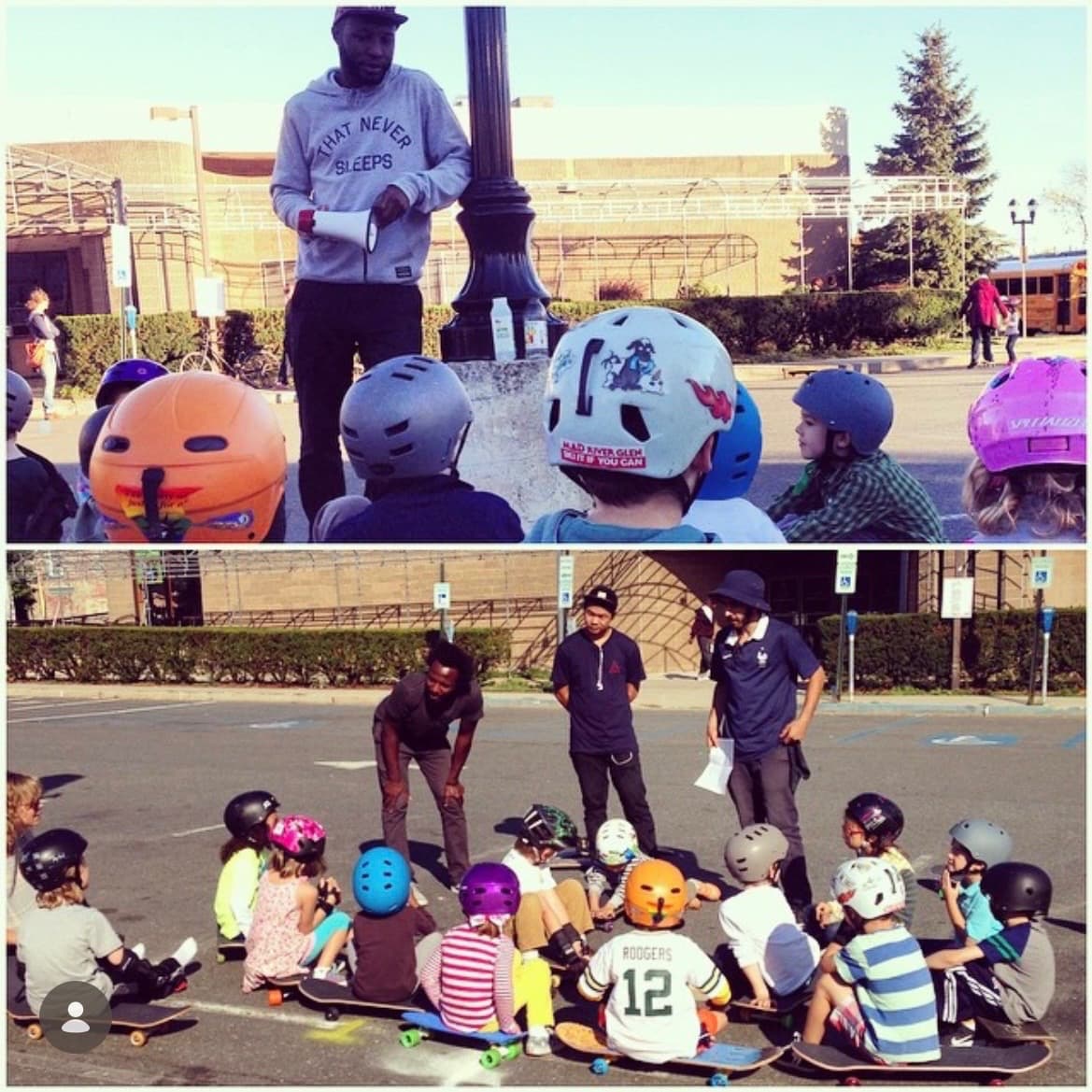
I get this call a lot. A parent wants to book a skateboard lesson for their kid, but they’re worried because their child is shy, or anxious, or “not the sporty type.” They want to know if their kid will be okay. If I’ll be patient. If I’ll push too hard.
I always tell them the same thing: the nervous kids are some of my favorite students. Not because the nervousness goes away instantly — it doesn’t always — but because when a kid who was scared to even stand on a board ends up rolling across the parking lot on their own, that look on their face is something else.
Here’s what it looks like when a nervous kid shows up for a lesson.
What happens in the first 10 minutes of a skateboard lesson for a shy kid?
The first 10 minutes are about trust, not tricks. We start on grass where the board can’t roll, so there’s zero pressure. The American Academy of Pediatrics recommends letting children acclimate to new physical activities at their own pace, and that’s exactly what this is — standing, feeling the board, and realizing it’s not as scary as it looked from the sideline.
I don’t start a nervous kid on pavement. We start in the grass. The board doesn’t roll in grass, so there’s nothing to be scared of. They just stand on it. Get used to the width, the feel of the grip tape, the way it tips side to side a little. Some kids spend the first ten minutes right there, and that’s fine. We’re not on a schedule.
I talk to them while they’re up there. Not about skateboarding — about whatever they want to talk about. School, their dog, a video game, whatever. The point is to get them comfortable with me before I ask them to do anything that feels risky. Once they’re relaxed on the board in the grass, moving to flat pavement is a much smaller step than it would have been five minutes ago.
Before any of that, I teach them how to fall. That sounds backwards, but it’s the single most important thing for a nervous kid. When they know how to bail safely — drop to their knee pads, roll with it — the fear of falling drops way down. I’ve seen this work especially well for kids dealing with anxiety around physical activities. They’re wearing full gear anyway. Helmet, knee pads, elbow pads, wrist guards. They’re padded up.
How do skateboard instructors handle shy or nervous kids?
A good instructor reads the kid and adjusts, not the other way around. The APA notes that approximately 7% of children experience social anxiety, and many more show situational nervousness in new settings. That means adapting pace, conversation, and expectations to each child — quiet kids get space, talkative kids get heard, and no one gets pushed before they’re ready.
Some nervous kids are quiet. They hang back, watch, and need a few minutes before they’re ready to engage. Other nervous kids talk nonstop because that’s how they process. Some cling to a parent. Some act like they don’t care as a way of protecting themselves in case they’re not good at it.
I read the kid and adjust. A quiet kid gets more space and less instruction up front. A talker gets conversation first and skating second. A kid who’s pretending not to care gets a low-key approach — no big announcements, no “great job!” after every little thing, just casual guidance until they forget they were supposed to be nervous.
The one thing I never do is push. I don’t say “come on, just try it” to a kid who isn’t ready. That’s how you lose a kid’s trust in thirty seconds. They set the pace. If they want to spend the whole first lesson standing on the board and pushing two feet, that’s a successful lesson. They showed up, they got on the board, and they didn’t hate it. That’s the foundation.
Think your kid might be ready?
Book a private lesson with Leon. No pressure, no group setting, just patient one-on-one instruction.
How do you know if a shy kid will like skateboarding?
You watch for small signals, not big declarations. A shy kid who liked their lesson probably won’t announce it — they’ll show it. Research from the AAP confirms that children who engage in self-paced physical activities often show increased confidence over time, even when they don’t verbalize enjoyment right away. The tells are subtle, and parents miss them if they’re only listening for words.
Parents sometimes can’t tell whether their kid had a good time or not, especially if the kid is quiet about it. Here are some things I see that usually mean they’re hooked, even if they don’t say so:
- They don’t want to give the board back at the end of the lesson.
- They ask a specific question about a trick or a move they saw someone else do.
- They fall, look surprised, and get right back on without being told to.
- They start experimenting on their own — trying to go a little faster, turning a little sharper.
- On the car ride home, they talk about it. Even just “that was okay” from a shy kid is usually a green light.
The nervous kids who end up loving skateboarding aren’t the ones who suddenly become fearless. They’re the ones who realize they can be a little scared and still do it. That’s a big deal for a kid. It’s one of the ways skateboarding builds resilience, and it’s one of the few activities that teaches it at their own speed.
Should I push my shy kid to try skateboarding?
Gentle encouragement, not pushing. The APA recommends that parents support anxious children by providing safe exposure to new activities rather than forcing participation or avoiding the activity entirely. Booking the lesson is the encouragement — what happens inside it should be entirely on the kid’s terms, with an instructor who knows when to guide and when to back off.
I’ve heard every version of the worry. Let me go through the big ones.
“Will they get hurt?”— First lessons are flat ground only. No ramps, no hills, no speed. Full safety gear every time. I teach falling technique before we even start rolling. Can a kid scrape a knee? Sure, same as running around a playground. But the risk during a first lesson is about as low as it gets.
“Will they be embarrassed?”— Private lessons are just me and the kid. Nobody’s watching. There’s no group of other kids who are better — that’s a big reason I recommend private over group for nervous beginners. If they fall, the only person who sees it is someone who falls for a living. I make sure they know that everyone falls — I still fall — and that falling is literally part of the sport, not a sign that they’re bad at it.
“What if they cry?”— Then they cry. It happens. Some kids cry when they’re frustrated, some cry when they’re overwhelmed, some cry just because it’s a lot of new stuff at once. I don’t make a big deal out of it. We take a break, talk about something else, and when they’re ready, we try again. Most of the time they’re back on the board within a few minutes.
“What if they want to quit?”— If a kid genuinely wants to stop, we stop. No guilt trip, no “just five more minutes.” But I’ll be honest — this almost never happens once we’re into the lesson. The kids who seem like they might quit are usually the ones who just need a slightly different approach, not more pressure.
Is it normal for kids to be nervous before skateboard lessons?
Completely normal. About half the kids who show up for a first lesson with me are some level of nervous. The AAP notes that mild anxiety around new physical activities is a typical part of childhood development, not a sign that something is wrong. Skateboarding looks hard from the outside, the board feels wobbly, and they don’t know what’s coming. That nervousness usually fades once they’re actually on the board.
I want parents to know this because a lot of them think their kid is the only one who’s scared. They’re not. Roughly half the kids who show up for a first lesson are some level of nervous. It’s completely normal. Skateboarding looks hard, the board feels wobbly, and they don’t know what’s going to happen. Of course they’re nervous.
The ones who surprise me are the kids whose parents warned me the most. “He’s really shy, I don’t know if this is going to work.” And then twenty minutes in, the kid is rolling across the lot grinning. It doesn’t always happen that fast, but it happens more than you’d expect.
If you want to know what to bring and how to prepare, I have a tips page that covers gear, what to wear, and what to expect. And if you’re looking at this for a kid who doesn’t do well in team settings, I wrote about why skateboarding works for kids who don’t like team sports.
What if my kid is too shy for a skateboard lesson?
There’s no such thing as too shy. The APA emphasizes that gradual, supported exposure to new experiences is one of the most effective ways to help children move through shyness and social hesitation. A first lesson with a patient instructor isn’t the thing that happens after a kid gets over their nerves — it’s the thing that helps them get there.
If your kid has been asking about skateboarding but seems too nervous to start, the lesson itself is how they get past that. You can’t talk a kid out of being nervous. But you can put them in a situation where they realize the thing they were afraid of isn’t that scary. That’s what a good first lesson does.
Check out kids’ lesson options or go ahead and book a session. I’ll meet them where they are.
Frequently Asked Questions
What if my kid cries during the skateboard lesson?+
It happens, and it’s not a problem. Some kids cry when they’re overwhelmed or frustrated, especially during something new. Leon doesn’t push through tears — he pauses, talks it out, and lets the kid decide when they’re ready to try again. Most of the time they get back on the board within a few minutes.
Will my nervous child be with other kids during the lesson?+
Private lessons are one-on-one, so your child gets Leon’s full attention without any social pressure. There are no other kids watching or waiting. Group lessons are small (2-4 kids), and Leon only groups kids at similar levels so nobody feels behind.
How do I know if my child is ready for skateboard lessons?+
If they can stand, walk, and follow basic instructions, they’re ready. Readiness isn’t about confidence — it’s about basic physical ability. Most kids age 5 and up are physically ready. Being nervous doesn’t mean they aren’t ready.
What happens if my child wants to stop mid-lesson?+
Leon follows the kid’s lead. If they need a break, they take a break. If they want to sit and watch for a few minutes, that’s part of the lesson. If they genuinely want to stop, the lesson ends — no guilt, no pressure.
Will my child get hurt during their first skateboard lesson?+
First lessons are on flat ground with full safety gear — helmet, knee pads, elbow pads, and wrist guards. Leon teaches safe falling technique before anything else. There are no ramps, no hills, no speed. The risk during a beginner lesson is very low.
My child is interested but too scared to try. What should I do?+
Book a lesson anyway. You’d be surprised how many kids show up terrified and leave asking when they can come back. Leon often starts by just letting them stand on the board in the grass — no rolling, no balance challenge, just getting used to the feeling.
Ready to get them started?
Private skateboard lessons for nervous and shy kids in NYC and Westchester. Patient instruction, full safety gear, and zero pressure.