Add Skateboarding to Your Summer Camp Schedule
A practical guide for camp directors and program coordinators: what skateboarding looks like as a camp activity, what you need to provide (almost nothing), and how to book it.
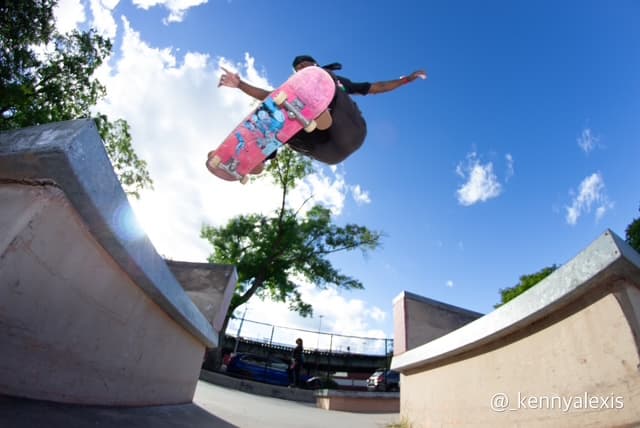
If you run a summer camp, you already know the drill: parents want a schedule that keeps their kids active, engaged, and off screens. They also want something their kid hasn’t done a hundred times before. Skateboarding checks every one of those boxes, and it’s easier to add to your programming than you’d think.
I’ve been teaching skateboarding for over 20 years, including group sessions at day camps, sports camps, and enrichment programs across NYC and Westchester. This guide covers the logistics from your side of the table: what it takes to add skateboarding to your camp schedule, how sessions are structured, and what your staff needs to know (short answer: not much).
Why camps are adding skateboarding to the rotation
Camp directors tell me the same thing: they need activities that get kids excited on day one, not day five. Skateboarding does that. When you announce a skateboard session, the energy in the room shifts. It’s different from another round of kickball or another trip to the arts and crafts table, and kids respond to that.
Part of it is novelty. Most campers have never stood on a skateboard before. That first moment of rolling forward on their own—the grin is universal. Part of it is the culture around skateboarding. There are no tryouts, no bench, no being picked last. Every kid gets their own board and works at their own pace. The kids who don’t connect with team sports often end up being the most engaged in a skateboard session.
There’s also the Olympic factor. Skateboarding debuted in Tokyo in 2021, returned in Paris in 2024, and is coming back for the 2028 LA Games. That gives it a level of legitimacy that makes the conversation with parents straightforward. This isn’t a fringe activity. It’s a recognized competitive sport with structured coaching and a growing youth participation base. When families see it on your schedule, they understand what it is.
From a programming standpoint, skateboarding fills a gap. Most camp schedules rotate between team sports, swimming, and creative activities. Skateboarding is an individual sport that happens outdoors, requires real physical effort, and teaches persistence in a way that campers carry with them. It’s not replacing anything on your schedule. It’s adding something you don’t already have.
How to structure a skateboard session in your camp day
There are two formats that work well for camps, and the right one depends on your schedule and goals.
Single-session format works for camps that want skateboarding as a one-time special activity. I come for 60 to 90 minutes, teach the fundamentals—stance, balance, pushing, stopping, how to fall safely—and every kid walks away having ridden a skateboard. This is a good fit for camps that rotate through different enrichment providers each week, or for a camp-wide special event day.
Multi-day progression is where the real growth happens. Over three to five sessions across a week (or spread over multiple weeks), campers build on what they learned the day before. Day one covers safety and basic riding. By day three, they’re turning and stopping with confidence. By the end of the week, the more advanced kids are working on tricks. The progression format mirrors how I structure school programs, and it’s what I recommend for camps that want skateboarding to be a core part of the summer, not just a drop-in.
Each session follows a clear structure: warm-up, skill introduction, guided practice, and a wrap-up where kids show each other what they figured out. That last part matters for camp culture. It builds a sense of accomplishment and gives quieter kids a moment to be recognized.
Both formats fit into a standard camp time block. I work within your existing schedule—morning sessions, afternoon sessions, whatever slot you have open. No special setup time required on your end.
What the camp needs to provide
This is the part that usually surprises camp directors: you don’t need to provide much at all. No equipment purchases. No special facilities. No staff training.
Here’s the full list:
- ■A flat, paved surface: A basketball court, parking lot, blacktop area, or any smooth flat ground. Most camps already have one of these.
- ■A time slot: 60 to 90 minutes is ideal. I can work with shorter blocks, but 60 minutes is the minimum for a meaningful session.
- ■Closed-toe shoes on campers: Flat-soled shoes work best. No sandals, no Crocs, no flip-flops.
That’s it. I bring all the equipment: skateboards sized for the age group, certified helmets, knee pads, elbow pads, and wrist guards. Every camper is fully geared up before they touch a board. Your staff doesn’t need to manage anything—I handle the instruction, the equipment distribution, and the safety protocols. Your counselors can supervise on the sidelines like they would for any other outside provider.
Interested in bringing skateboarding to your camp?
Call or text to discuss scheduling, group sizes, and pricing for your program.
What ages it works for and how I handle mixed groups
I teach kids as young as 3, but for a camp setting, the sweet spot starts around age 5. That’s when kids can follow group instructions and practice alongside peers without needing constant one-on-one attention. From 5 through teens, the curriculum adjusts to meet each group where they are.
Mixed skill levels within a group are normal, and I’m used to managing them. In a typical camp session, some kids have ridden before and some have never touched a board. The session structure handles this naturally: everyone starts with the same safety fundamentals, and from there I give individual progressions. The kid who already knows how to push gets a turning challenge. The kid who’s still finding their balance gets more support on the basics. Nobody is bored and nobody is lost.
If your camp separates kids by age group, that makes sessions easier to tailor. But mixed-age groups work fine too. I’ve run sessions with 6-year-olds and 12-year-olds in the same group, and the dynamic is usually positive—the older kids often step up and help the younger ones, which gives them something to be proud of beyond their own progress.
Groups are capped at 20 per session. For groups larger than that, I bring an assistant instructor to keep the ratio tight. If your camp has 40 kids who want to skate, we run two back-to-back sessions or split into two simultaneous groups. I’ll work with you on the logistics. More on how I structure group sessions here.
Safety: the question every camp director asks first
Every camp director I talk to asks about safety before anything else. I respect that. You’re responsible for other people’s kids, and adding a new activity means you need to know exactly how risk is managed.
Here is how I handle it:
- ■Helmets are required, no exceptions. Every camper wears a certified helmet for the entire session. I bring enough for the full group.
- ■Falling is the first lesson. Before anyone rides, I teach how to bail safely. Kids learn to roll out of falls, to protect their wrists, and to stay loose. This is how every session starts, whether it’s a first-timer or a returning group.
- ■Full pads for every participant. Knee pads, elbow pads, and wrist guards. All provided. All worn.
- ■Controlled progression. I decide when a camper is ready for the next skill. Nobody attempts anything beyond what I’ve cleared them for. The pace is set by ability, not enthusiasm.
- ■20+ years of experience. I’ve been teaching skateboarding across NYC and Westchester for over two decades. I know how to manage group dynamics, read a kid’s comfort level, and keep a session moving without pushing anyone past their limit.
With proper gear and professional instruction, skateboarding is comparable to most organized youth sports in terms of injury rates. I wrote a full breakdown of the safety question in this article on skateboarding safety for kids. It covers the research, the gear, and how proper instruction changes the risk profile. If you need to make the case to a camp board or an insurance provider, that post has the data.
How to book skateboarding for your camp
The process is straightforward. Call or text me at (914) 294-4407 and tell me what you’re working with: how many kids, what ages, how many sessions you want, and when your camp runs. I’ll put together a plan that fits your schedule and budget.
A few things that help if you have them ready:
- ■The number of campers who would participate
- ■Age range of the group
- ■Whether you want a single session or a multi-day progression
- ■Available time slots and the surface you’d use
Summer dates fill up fast, so the earlier in your planning cycle you reach out, the better your options. Spring is when most camps lock in their summer enrichment providers.
I work with camps across NYC and Westchester County, and I’ve partnered with day camps, sports camps, arts camps, and faith-based programs. Every camp is different, and I build each engagement around what your program needs. You can also book online or visit my group sessions page for more on how I run group programming.
Frequently asked questions
Does the camp need to provide skateboards or safety gear?+
No. The instructor brings everything: skateboards, certified helmets, knee pads, elbow pads, and wrist guards for every participant. Campers just need closed-toe flat-soled shoes and clothes they can move in.
How many campers can participate in one skateboard session?+
Groups are capped at 20 per session to keep the instructor-to-camper ratio tight. For larger groups, an assistant instructor comes along. Sessions can run back to back for camps with more than 20 kids who want to participate.
What ages work for a camp skateboard activity?+
Ages 5 and up work well in a camp setting. Leon teaches kids as young as 3 in private lessons, but structured group sessions at camp are best starting around 5 when kids can follow directions and practice alongside peers. The curriculum adjusts for age and ability within the group.
How far in advance should a camp book a skateboard instructor?+
As early as possible. Summer is the busiest season for group bookings, and dates fill up fast. Reaching out in the spring while you are building your summer schedule gives you the best availability. Call or text Leon at (914) 294-4407 to start the conversation.
Bring skateboarding to your camp
One instructor, all equipment provided, groups up to 20. NYC and Westchester, all summer long.