September 14, 2026
Is skateboarding safe for kids?
The honest answer, with real numbers and practical advice for parents who are weighing the risk.
I get this question from parents all the time, and I always appreciate it. It means you’re thinking about your kid’s safety, which is exactly what you should be doing. So let me give you a straight answer.
Skateboarding has risks, like any physical activity. But with proper gear, proper instruction, and age-appropriate progression, it is no more dangerous than most sports kids already play. The data supports that, and I’ll walk through it below.
Is skateboarding more dangerous than other youth sports?
No. Skateboarding is statistically less dangerous than most youth sports kids already play. CPSC National Electronic Injury Surveillance System data shows skateboarding accounts for roughly 70,000 emergency room visits per year in the U.S.—compared to over 200,000 for basketball and over 400,000 for cycling.
Parents often assume skateboarding is one of the more dangerous activities a kid can do. The numbers tell a different story. According to the Consumer Product Safety Commission and the American Academy of Pediatrics, skateboarding accounts for roughly 70,000 emergency room visits per year in the U.S.
Compare that to other youth sports:
- Basketball: over 200,000 ER visits per year
- Cycling: over 400,000 ER visits per year
- Football: over 215,000 ER visits per year
- Soccer: over 85,000 ER visits per year
- Skateboarding: about 70,000 ER visits per year
That doesn’t mean skateboarding is risk-free. It means it sits in the same range as other activities most parents already feel fine about. The perception of danger comes from the fact that skateboarding looks dangerous. A kid on a skateboard looks more exposed than a kid on a soccer field. But the actual injury rates tell a more balanced story.
What are the most common skateboarding injuries for kids?
Wrist fractures and sprains are the most common skateboarding injuries for children. According to Safe Kids Worldwide, fractures account for about one-third of all skateboarding injuries treated in emergency rooms, with the wrist and forearm the most frequently affected areas. Wrist guards and proper fall technique reduce this risk significantly.
The most common skateboarding injuries are wrist sprains and fractures. This happens when someone falls and catches themselves with their hands. It’s an instinctive reaction, and it’s the one I spend the most time correcting in early lessons.
After wrists, the next most common are scrapes and bruises, ankle sprains, and elbow injuries. Serious injuries like concussions and broken bones do happen but are less common, especially among kids who are wearing proper gear and skating at an appropriate level for their ability.
The pattern I see after 20+ years is clear: most injuries happen when kids attempt things beyond their skill level without guidance, usually at a skatepark with no supervision. A kid who has been riding for two weeks dropping into a 5-foot bowl because their friend dared them is a very different situation than a kid learning to push on flat ground with an instructor.
What safety gear do kids need for skateboarding?
At minimum, every child needs a CPSC-certified helmet. The CPSC reports that helmet use can reduce the risk of head injury by up to 85 percent. After the helmet, wrist guards and knee pads round out the essentials for beginners. In New York State, helmets are required by law for skateboarders under 14.
A helmet is the most important piece of safety equipment. Head injuries are the most serious skateboarding injuries and the most preventable. A CPSC-certified helmet that fits properly, one that sits level on the head and doesn’t wobble, does the job. You do not need to spend more than $30-40. I wrote a full guide on what protective gear kids need.
After the helmet, wrist guards are the next most useful piece of gear. Since wrist injuries are the most common, wrist guards directly address the most likely risk. Knee pads are good for confidence, especially for younger kids or nervous beginners. Elbow pads are optional for most flat-ground skating but helpful at skateparks.
In New York State, helmets are required by law for skateboarders under 14. Beyond the legal requirement, I require helmets for all kids under 12 in my lessons. No exceptions.
Want to try it yourself?
Book a private lesson with Leon. NYC and Westchester, all ages and skill levels.
Do skateboard lessons reduce injury risk?
Yes. The American Academy of Pediatrics notes that most skateboarding injuries occur among unsupervised riders who attempt skills beyond their ability. Structured instruction teaches safe falling technique, controlled progression, and environmental awareness—the three factors that prevent the majority of avoidable injuries.
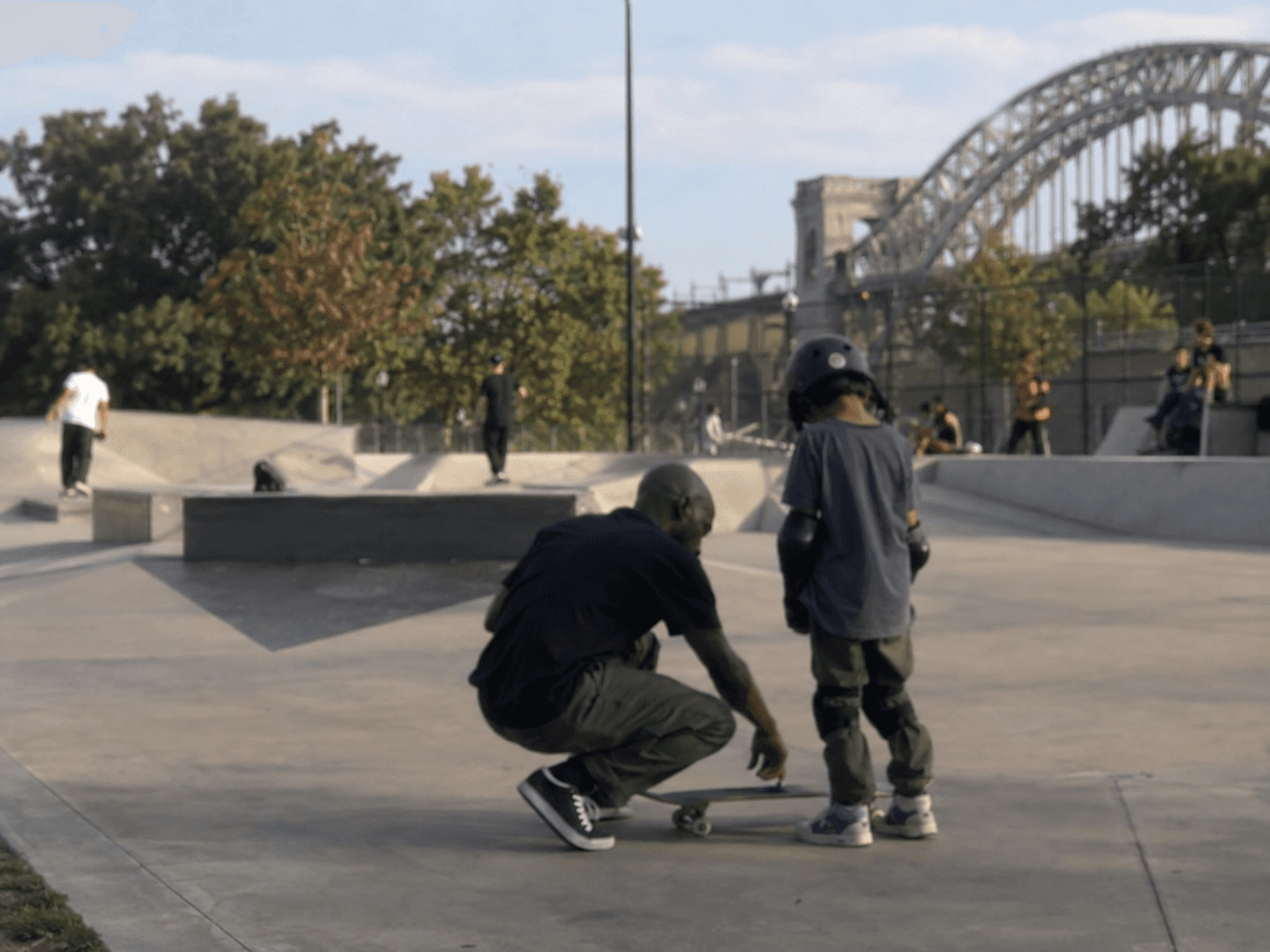
In every beginner lesson, the first thing I teach is how to fall safely. Not how to avoid falling, because that’s unrealistic. How to fall in a way that minimizes injury. That means learning to roll with the fall, keeping arms tucked, and letting pads absorb impact instead of wrists and elbows.
Beyond falling technique, an instructor controls the progression. I don’t let a kid try something they’re not ready for. That sounds obvious, but it’s the single biggest factor in safety. Kids skating unsupervised tend to skip steps. They see something on a YouTube video and try it immediately. An instructor builds skills in order so that by the time a kid attempts something harder, they already have the foundation for it. My parent’s guide to kids’ skateboard lessons covers what that progression looks like in practice.
I also teach kids to read their environment. Is the ground wet? Are there cracks in the sidewalk? Is someone walking in their path? Awareness of surroundings prevents more accidents than any piece of gear. If your child is shy or nervous about starting, I wrote about what that looks like and how I handle it.
Should kids skateboard unsupervised?
It depends on age and skill level. The AAP recommends that children under 10 always be supervised during wheeled sports. Older kids who have learned proper technique can practice on flat ground independently, but skateparks should be supervised until a child has the skills to handle ramps and transitions safely.
I encourage kids to practice between lessons. That’s how they improve. But where and how they practice matters. A flat driveway or a quiet sidewalk is a good place for a younger kid to practice pushing and turning. A skatepark is not the right environment for a beginner without supervision.
For younger kids, ages 4 through 7 or so, I recommend a parent be nearby when they practice. Not hovering, but present. For older kids who are comfortable on the board, practicing with a friend is usually fine as long as they’re sticking to flat ground and skills they’ve already learned.
Schools and after-school programs are starting to include skateboarding in their enrichment options, which is a great way for kids to get supervised instruction in a structured setting. The format works well because it combines instruction with a social group, and kids progress together at a pace that matches their ability.
Is skateboarding safe enough for my child?
With the right setup, yes. The CPSC data shows that skateboarding ranks below basketball, cycling, and football in annual ER visits. When kids wear certified helmets, use wrist guards, and learn through structured instruction, the risk of serious injury drops to a level comparable to any recreational sport.
Skateboarding is as safe as you make it. A kid wearing a helmet, learning from an instructor, and progressing at an appropriate pace is at low risk for serious injury. A kid with no gear, no instruction, and no supervision attempting things beyond their ability is at much higher risk. The activity itself isn’t the variable. The conditions around it are.
If you’re worried about safety, that’s good. It means you’ll set your kid up the right way: proper gear, proper instruction, and the patience to let them build skills before they chase the hard stuff. That approach works in skateboarding the same way it works in any sport.
Frequently asked questions
Want your kid to learn safely?
Private kids’ lessons in NYC and Westchester. Helmets required, safe falling taught first, and progression matched to your kid’s ability.
Book a Lesson