September 14, 2026
What age can kids start skateboarding?
The honest answer from an instructor who has taught kids as young as four.
This is the question I get asked more than any other by parents. Usually it comes as a text: “My kid is 5, is that too young?” Or “She’s only 4 but she keeps grabbing her brother’s board.”
The short answer: most kids can start around age 4 or 5 with the right approach. (Even younger? I cover skateboarding for toddlersin a separate post.) But the real answer depends more on the individual kid than on a number. I’ve had 4-year-olds who took to it right away, and I’ve had 6-year-olds who needed a few sessions to warm up. Both are perfectly normal.
| Age Range | What They Can Learn | Typical Session | Board Size |
|---|---|---|---|
| 3–4 | Standing, balancing, short pushes | 30–45 min | Micro (6.5”–7.0”) |
| 5–7 | Pushing, turning, gentle stops | 45–60 min | Mini (7.0”–7.5”) |
| 8–12 | Confident riding, beginning tricks | 60 min | Mid/Full (7.5”–8.0”) |
| 13+ and adults | Full trick progression, park skating | 60 min | Full (8.0”–8.5”) |
Can a 4 or 5 year old learn to skateboard?
Yes. Most 4 and 5-year-olds can learn the basics—standing, balancing, and short pushes on flat ground—with the right setup and supervision. The American Academy of Pediatrics recommends kids under 5 only skate with close adult supervision, which is exactly how I run lessons at this age.
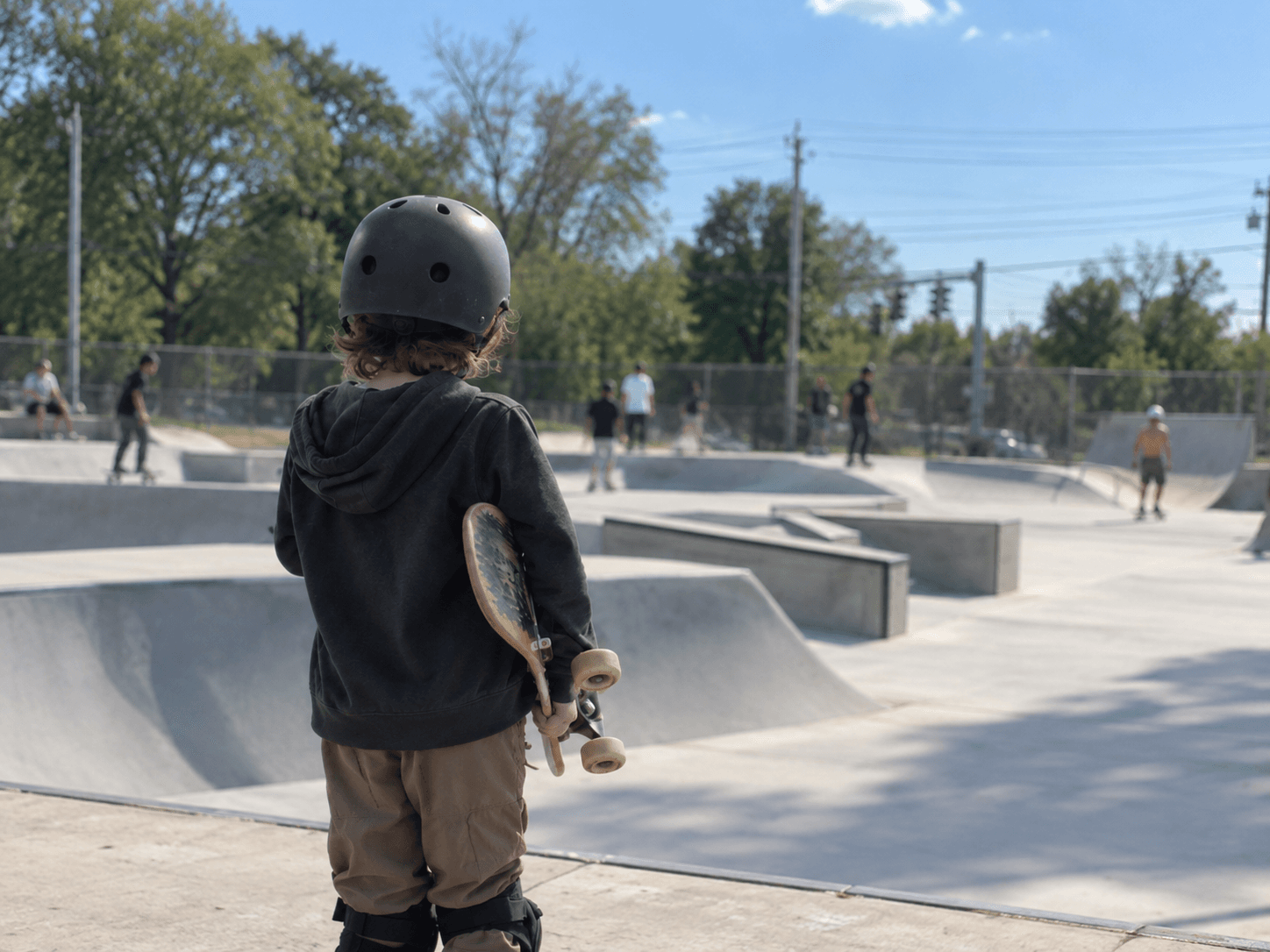
At this age, lessons are less about skateboarding technique and more about building comfort on the board. I focus on standing, sitting, rocking side to side, and eventually pushing a few feet on flat ground. The goal is to make the board feel like a toy, not something scary.
Most 4 and 5-year-olds can stand on a board and push with help. Some can push on their own by the end of the first lesson. Attention spans are short at this age, so I keep sessions to 30 or 45 minutes and mix in games. We might play “red light green light” on the board, or I’ll set up a little obstacle to roll around.
The right board size matters a lot at this age. A full-size skateboard is way too big for a 4-year-old. A 7.0 to 7.25 inch deck, with smaller trucks and soft wheels, is much easier for small feet to manage. I cover board sizing in more detail in my parent’s guide to kids’ skateboard lessons.
What can a 6 to 8 year old learn on a skateboard?
A lot. Kids ages 6 to 8 typically have the coordination and focus to learn pushing, turning, stopping, and riding small slopes within a few sessions. Research on motor development shows most children reach the balance and spatial awareness needed for board sports by around age 6.
This is the sweet spot for starting. Kids in this age range usually have enough balance, coordination, and focus to learn actual skateboarding skills. They can push on their own, learn to turn, learn to stop, and start working on riding down small slopes.
By age 7 or 8, most kids can learn to ride confidently in a few sessions. The ones who get hooked start asking about tricks pretty quickly. This is also the age where skateboarding becomes social. They want to skate with friends, which is great motivation to keep practicing.
I find that kids in this age range benefit a lot from private lessons because they can progress at their own pace without feeling compared to other kids. Some are ready for group sessions after a few privates, which is a great next step when they want that social element.
Is 9 to 12 a good age to start skateboarding?
It’s one of the best ages to start. Kids 9 to 12 have stronger body awareness, longer attention spans, and the ability to practice independently between sessions. Many of my students who began at this age were riding confidently within two lessons and working on ollies within a month.
Older kids often pick things up faster because they have better body awareness and can process verbal instructions more easily. A 10-year-old who starts from scratch can usually ride comfortably within a couple of sessions and start working on ollies within a month or two.
If your kid is this age and hasn’t tried skateboarding yet, they are not behind. Starting at 10 is not late. Some of the best skaters I teach started at this age because they were old enough to really commit to practicing on their own between lessons.
Want to try it yourself?
Book a private lesson with Leon. NYC and Westchester, all ages and skill levels.
How do I know if my kid is ready for skateboarding?
Look for three things: they can balance on one foot for a few seconds, they can follow simple two-step instructions, and they actually want to try. Interest matters more than age or athleticism—a curious kid who falls and gets back up is ready, even if their balance isn’t perfect yet.
Age is less important than a few specific things I look for:
- Can they balance on one foot for a few seconds? This doesn’t need to be perfect. If they can do it at all, they have enough balance to start.
- Can they follow simple instructions? “Put your foot here” and “hold onto my hand” are about as complex as it gets in a first lesson.
- Are they interested? This is the big one. A kid who wants to try will work through frustration. A kid who is only there because a parent signed them up will have a harder time.
- Can they handle a little frustration? Skateboarding involves falling off and trying again. Kids who shut down completely at the first difficulty may need another year before it clicks.
If you’re not sure, just book a single lesson and see how it goes. I can tell within the first 15 minutes whether a kid is ready or whether they’d benefit from waiting a bit. There’s no pressure and no judgment either way.
What safety precautions do kids need for skateboarding at different ages?
Every age needs a CPSC-certified helmet—no exceptions. For kids under 8, I also recommend knee pads and wrist guards since younger children fall more often and haven’t yet learned how to bail safely. Proper protective gear reduces the risk of serious skateboarding injuries by up to 85 percent, according to Safe Kids Worldwide.
Regardless of age, every kid needs a helmet. Skateboarding is safe with the right gear, and I require helmets for all kids under 12 in my lessons. Knee pads and wrist guards are also a good idea, especially for younger kids or anyone who is nervous about falling. I wrote a full breakdown on what gear your kid needs.
The right age to start is whenever your kid is curious enough to try. If they keep asking about it, that’s your signal. Don’t overthink it. Get them a helmet, find a flat patch of pavement, and let them stand on a board.
Frequently asked questions
Free Guide
5 Things to Know Before Your First Lesson
What to wear, what to expect, and how to make the most of your first hour on a board.
Ready to get your kid on a board?
Private kids’ lessons in NYC and Westchester. I work with kids as young as 4 and keep it fun, safe, and pressure-free.
Book a Lesson